Before You Replace Your Boiler: The Less Obvious Parts of the Heating System Worth Checking
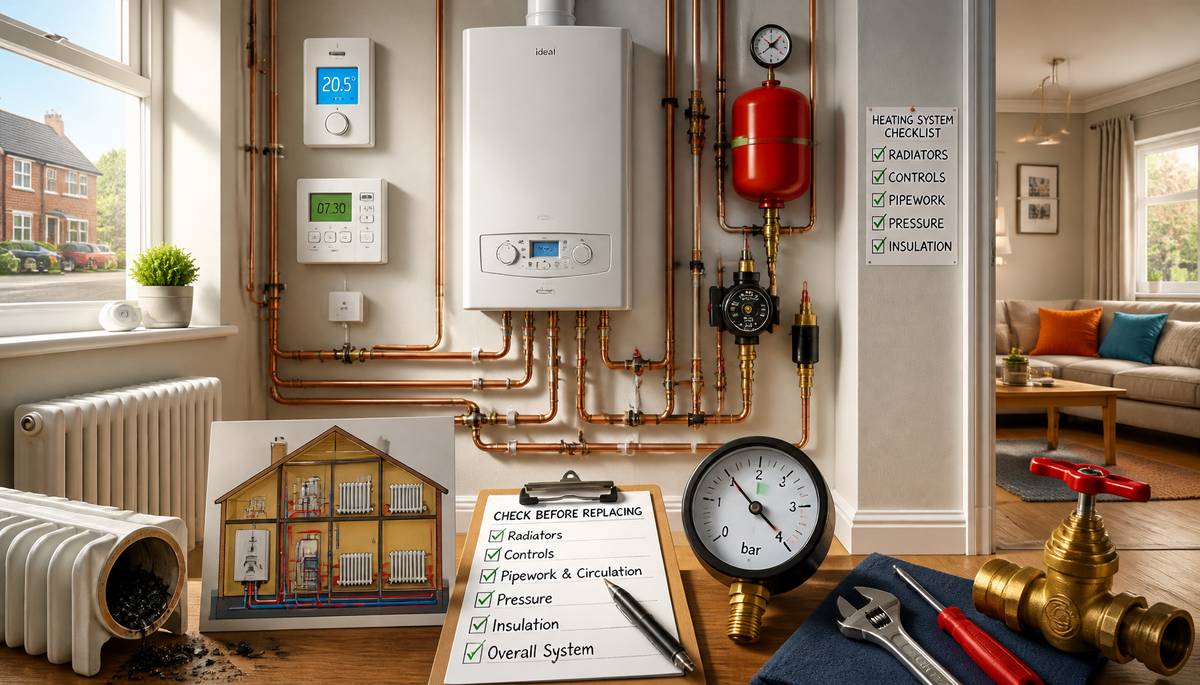 A boiler can acquire an impressive amount of blame simply by being the largest and most expensive-looking object connected to the heating system. Radiators lukewarm? Blame the boiler. Bedroom cold? Boiler. Mysterious clanking noise at 6:15 every morning? Clearly the boiler has developed a personal grievance. Yet poor heating performance can originate in several other parts of the system, and replacing the main appliance without investigating them may be an expensive way of discovering that the original problem is still there.
A central heating system is a collection of components working together. The boiler produces heat, but that heat still has to be circulated, controlled and transferred into the rooms efficiently. Before deciding an ageing boiler has reached retirement, it is worth looking at the supporting cast.
Start With the Radiators
Radiators provide useful clues about what is happening elsewhere in the system. A radiator that is cold at the top may contain trapped air, while one that remains cold towards the bottom can indicate an accumulation of sludge or other debris. If certain radiators heat properly while others stubbornly remain tepid, the problem may concern balancing or circulation rather than heat generation.
Radiator valves deserve attention too. Thermostatic radiator valves can stick, particularly after spending months largely closed during warmer weather. A faulty or restricted valve may prevent hot water entering a radiator effectively even while the boiler itself is operating perfectly well.
If several radiators are affected, professional investigation may reveal that the system needs balancing, cleaning or another relatively targeted repair. None of those possibilities automatically requires a new boiler.
Controls Can Cause Surprisingly Large Problems
Heating controls are easy to overlook because they are small, familiar and rarely make dramatic noises. Nevertheless, thermostats, programmers, timers, sensors and smart controls determine when the boiler operates and what it is being asked to achieve.
An incorrectly positioned thermostat can produce misleading results. If it sits somewhere unusually warm, for example, it may tell the heating system that the desired temperature has already been reached while colder rooms remain distinctly unconvinced. Old thermostats can also become inaccurate, while programming mistakes may create heating schedules apparently designed by somebody who leaves for work at 4:37am.
Before condemning the boiler, check that controls are functioning correctly, schedules make sense and temperature settings have not accidentally been altered.
Pipework May Be Restricting Circulation
Hot water needs an unobstructed route around the property. Older heating systems can contain sludge, corrosion products and deposits that gradually reduce circulation through radiators and pipes. Previous alterations can complicate matters further, particularly where extensions, additional radiators or replacement pipework have been incorporated over many years.
Poor circulation can make a perfectly serviceable boiler appear inadequate because the heat it produces is not reaching the places where it is needed. Cold spots, uneven radiator temperatures, slow warm-up times and unusual noises can all justify a closer examination of circulation.
The circulation pump is another important component. If it is failing, incorrectly set or struggling against restrictions within the system, heating performance may deteriorate even though the boiler continues producing hot water normally.
Pressure Is More Than a Number on a Gauge
Repeatedly falling system pressure should not simply become another household ritual involving the filling loop every Tuesday morning. Occasional adjustment may be necessary, but persistent pressure loss can indicate a leak, faulty valve, expansion vessel problem or another issue requiring investigation.
Likewise, unusually high pressure deserves attention. Rather than treating the gauge as decorative instrumentation supplied to make the boiler look technically impressive, note how the pressure behaves when the system is cold and when the heating is operating.
Poor pressure management can affect heating performance and place additional strain on components. Finding the cause may therefore restore normal operation without requiring wholesale boiler replacement.
Heat Can Disappear After the Boiler Has Done Its Job
Even a healthy heating system can seem disappointing when the property loses heat rapidly. Poor loft insulation, draughts, uninsulated pipework and other sources of heat loss can leave rooms cooling almost as quickly as the system warms them.
Before spending heavily on a new boiler, it therefore makes sense to consider whether the existing appliance is genuinely failing or merely fighting a building that is exceptionally talented at exporting heat.
Age Alone Does Not Convict a Boiler
An older boiler naturally attracts suspicion, particularly when heating bills rise or rooms take longer to warm. Age certainly matters: components wear, efficiency can decline and eventually replacement becomes the sensible option. But the date on the appliance should be treated as evidence rather than a verdict.
A fifteen-year-old boiler connected to a well-maintained, properly balanced system may perform more effectively than a much newer appliance attached to clogged radiators, poorly configured controls and neglected pipework. Simply fitting a powerful new boiler onto an unhealthy system can leave some of those underlying problems untouched. It is rather like replacing the engine because one tyre is flat. The new engine may be magnificent, but the journey remains strangely disappointing.
Look at the Heating System as a Whole
A useful diagnosis considers how the entire system behaves. Does every radiator warm at approximately the same rate? Are particular rooms consistently colder? Does pressure fall between heating cycles? Does the boiler frequently start and stop? Are there unexplained noises from the pump, pipes or radiators? Does hot water perform normally while space heating struggles?
These details can help distinguish a boiler fault from problems elsewhere. A heating engineer can then examine the appliance alongside the pump, valves, controls, radiators, pressure behaviour and circulation rather than beginning with the assumption that replacement is inevitable.
That distinction matters financially. Boiler replacement is a significant household expense, whereas some performance problems can potentially be addressed through servicing, balancing, cleaning, control adjustments or replacement of individual components. Conversely, if the boiler genuinely is inefficient, unreliable or uneconomical to repair, a thorough assessment provides much stronger grounds for replacing it.
New Boilers Still Need Healthy Systems
Checking the wider installation is worthwhile even when replacement ultimately proves necessary. A new boiler will still depend upon suitable circulation, clean system water, correctly functioning controls and appropriately balanced radiators.
Existing sludge and debris should not simply be introduced to an expensive new appliance and expected to behave themselves. Similarly, persistent pressure problems, inadequate pipework or faulty valves do not disappear because a shiny white box has arrived on the wall.
Modern heating controls can also provide opportunities to improve efficiency, but only when they are properly specified and configured for the property. More technology is not automatically better technology. A thermostat requiring a software engineering degree before anyone can make the lounge warmer has perhaps missed one of its core objectives.
Give the Boiler a Fair Heating
Replacing a boiler can be entirely justified when reliability, efficiency, repair costs or component availability make continued use impractical. The important point is that disappointing heating performance alone does not prove the boiler itself is responsible.
Radiators, valves, controls, pumps, pipework, system pressure and insulation all influence how warm a property feels and how efficiently energy is used. Checking these areas first can uncover faults that are cheaper and less disruptive to correct, while also ensuring that any eventual replacement boiler has a healthier system in which to operate.
A boiler may occupy centre stage, but central heating is very much an ensemble production. Before sending the leading actor into retirement, it is worth checking whether somebody backstage has simply forgotten to open a valve.
|
|