The Van Is the Billboard: Why Local Plumbing Marketing Still Needs a Physical Presence in a Digital World
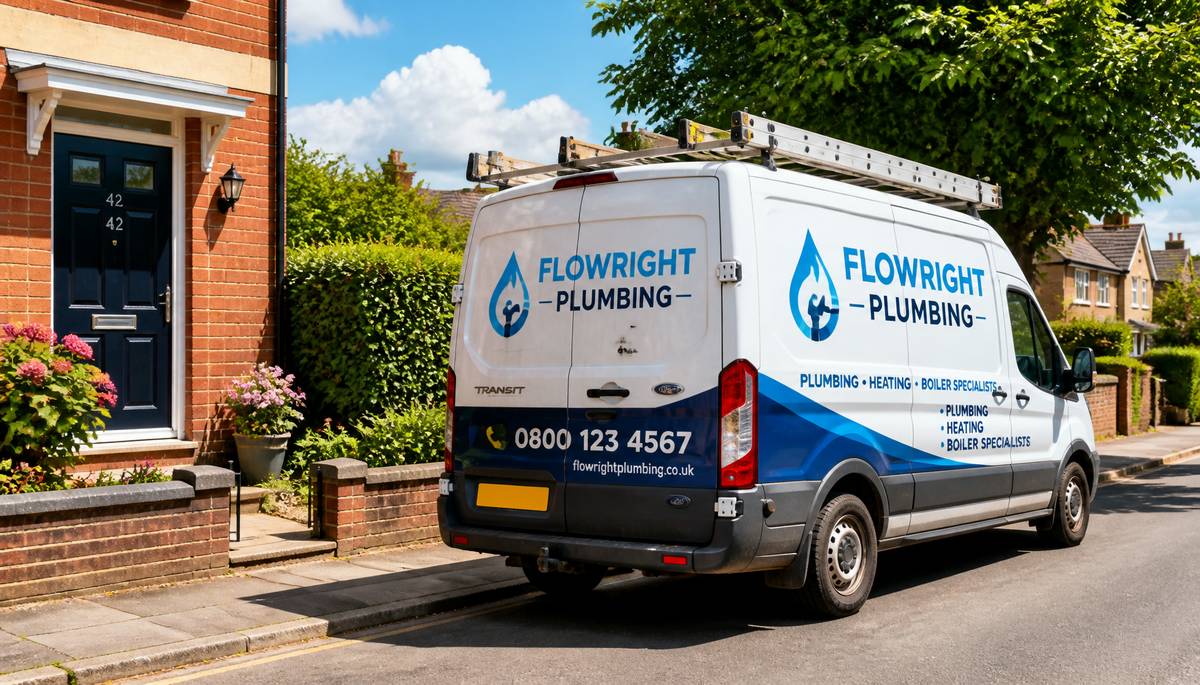 A plumber's van parked outside number forty-two might be doing more marketing than a thousand pounds spent persuading strangers to click on advertisements. While digital marketing specialists study conversion funnels and increasingly mysterious search algorithms, a battered Ford Transit with a memorable logo is quietly introducing its owner to an entire street.
Local plumbing businesses face an interesting challenge in 2026. Customers increasingly discover tradespeople through Google, social media and online reviews, yet plumbing remains an intensely physical profession. Nobody has successfully repaired a leaking radiator through a video call, although several homeowners have probably attempted it.
The most effective marketing strategies recognise that neighbourhood visibility and digital credibility are not competing approaches. They reinforce one another.
A Moving Advertisement That Never Clocks Off
A branded plumbing van is effectively a mobile advertising space, appearing wherever the business operates. Unlike paid online advertisements, it doesn't charge for impressions, clicks or the occasional accidental interaction from somebody attempting to close a browser window.
Professional vehicle graphics should communicate three things immediately: the business name, its principal service and a memorable way to make contact. Overcrowding the vehicle with fifteen services, six telephone numbers and a paragraph about customer satisfaction defeats the purpose. Drivers have enough difficulty reading road signs without studying an entire corporate brochure at traffic lights.
Consistency matters too. Using the same colours, logo and business name across vehicles, workwear, invoices and online profiles helps customers recognise a company they have encountered previously.
A clean, well-maintained vehicle also contributes to perceptions of professionalism. A van resembling an archaeological excavation may not inspire confidence when its owner offers to investigate somebody's expensive central heating system.
Why Familiarity Can Beat Advertising Budgets
People tend to feel more comfortable approaching businesses they recognise. For plumbers, repeated appearances in a neighbourhood can gradually establish that familiarity without requiring a formal introduction.
Consider two competing plumbing companies. One spends heavily on online advertising but has little visible presence locally. The other regularly completes jobs nearby, parks a recognisable van outside customers' homes and occasionally sponsors community activities.
When a homeowner discovers water dripping through the kitchen ceiling, the familiar company may have an immediate psychological advantage. Its name already means something, even if the homeowner has never used its services.
However, visibility must be supported by competent workmanship. A recognisable van associated with unreliable appointments or unfinished repairs can advertise a company's shortcomings just as effectively as its strengths.
Connecting the Pavement to the Smartphone
Traditional marketing becomes considerably more powerful when customers can move effortlessly from recognising a business offline to contacting it online.
QR codes offer one practical connection. A discreet code on a van, business card or printed leaflet can direct customers towards a mobile-friendly contact page, booking form or service information.
The destination matters more than the technology. Sending somebody to a cluttered homepage requiring six additional clicks to find a telephone number is hardly progress.
Businesses should also ensure their Google Business Profile displays accurate contact details, relevant service areas, current photographs and consistent opening information. Someone who remembers seeing a plumbing van nearby may subsequently search for the company by name rather than typing a generic phrase such as "emergency plumber near me".
That simple transition from street-level recognition to online enquiry is where physical and digital marketing begin working together.
Community Sponsorship Without the Corporate Circus
Local sponsorship offers plumbing businesses another opportunity to become familiar neighbourhood names. Supporting a junior football team, contributing towards a community fundraiser or helping a local charity can generate goodwill while placing the company in front of potential customers.
The financial commitment need not be enormous. Supplying shirts for a youth football team may deliver more meaningful local recognition than an expensive advertising campaign targeting people fifty miles away.
Authenticity is essential. Sponsorship should provide genuine community value rather than becoming an elaborate excuse to distribute promotional leaflets. Nobody attending a school summer fair particularly wants to be cornered by somebody explaining the benefits of a magnetic heating filter.
Facebook Groups and the Digital Village Noticeboard
Community Facebook groups function rather like traditional village noticeboards, except with considerably more arguments about parking and suspiciously missing wheelie bins.
For plumbing businesses, these groups can provide opportunities to establish a helpful local presence. Answering straightforward questions about dripping taps, frozen pipes or boiler maintenance demonstrates expertise without requiring an aggressive sales pitch.
However, group rules deserve respect. Repeated promotional posts can quickly irritate residents and moderators. Helpful participation generally creates a stronger impression than treating every conversation as an advertising opportunity.
Satisfied customers who independently recommend a plumber can be particularly valuable. Such recommendations connect personal experience with local familiarity, giving potential customers a reason to investigate further.
Making Local Search Content Actually Local
Location-specific website content can connect neighbourhood recognition with search engine visibility. A plumbing company serving several districts might create genuinely useful pages addressing the particular plumbing characteristics of each area.
Older neighbourhoods may contain ageing pipework, shared drainage arrangements or unusual water pressure problems. Newer developments might present different maintenance concerns.
Discussing these issues demonstrates geographical knowledge while helping residents understand their properties.
Simply duplicating the same paragraph across twenty pages and replacing one town name with another achieves considerably less. Search engines and homeowners alike deserve something more informative than a geographical game of Mad Libs.
Measuring What Happens Beyond the Kerb
Combining physical and digital marketing also requires sensible measurement. Plumbing businesses can ask new customers how they discovered the company, track enquiries through their website and monitor searches for their business name.
Dedicated landing pages or carefully configured QR codes can reveal whether particular printed materials generate enquiries. However, not every benefit of neighbourhood visibility can be attributed precisely.
Someone might notice a van repeatedly over six months before finally searching online. The resulting enquiry may appear to originate from Google, although the original influence was entirely physical.
Businesses should therefore assess marketing performance over meaningful periods rather than assuming every successful activity produces an immediately measurable click.
Keeping the Wheels of Reputation Turning
Successful local plumbing marketing in 2026 is less about choosing between traditional advertising and digital technology than understanding how customers encounter and remember businesses.
A recognisable van creates awareness. Reliable workmanship establishes trust. Community involvement builds familiarity. Online reviews, useful local content and straightforward contact options convert that recognition into enquiries.
None of these activities requires a plumbing company to become a miniature advertising agency. They require consistency, attention to customer experience and an understanding that local reputation develops through repeated encounters.
The plumbing van remains particularly valuable because it advertises the business while its owner performs the work that ultimately determines whether the advertising succeeds.
And unlike a complicated digital marketing campaign, it can occasionally carry a replacement toilet.
|
|

