Why Your Hot Water Runs Out Faster Than It Used To
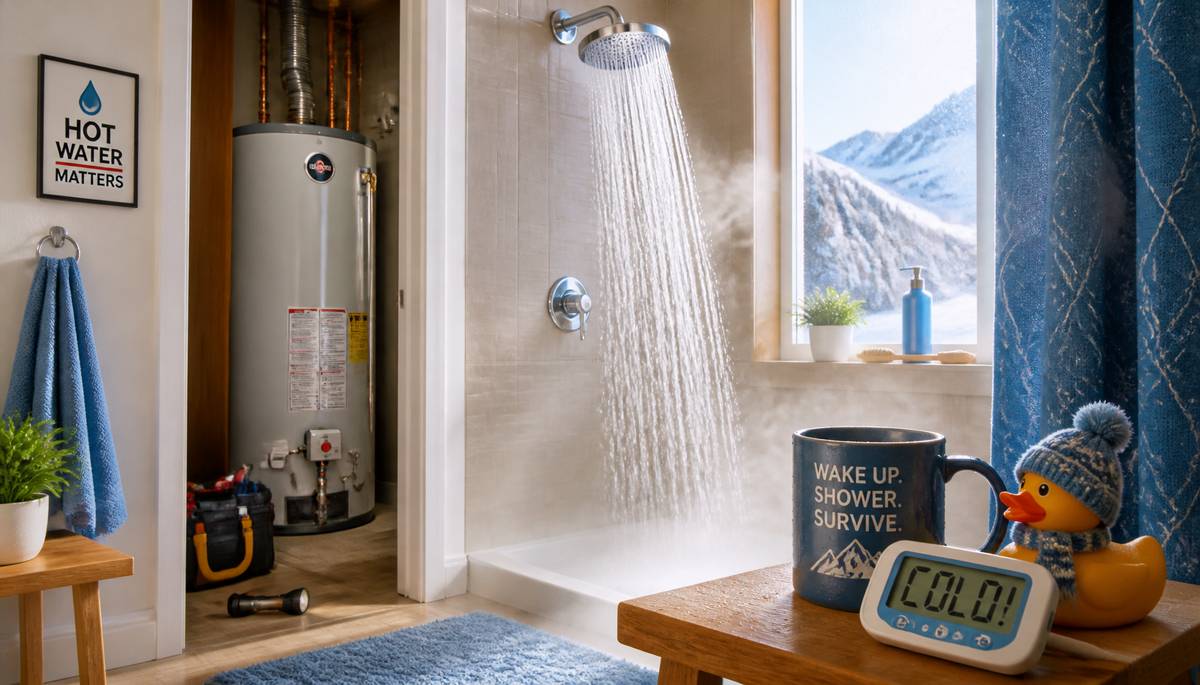 Your shower has apparently developed a new feature: an unexpected demonstration of Arctic survival conditions. What once provided twenty minutes of comfortable hot water now struggles to manage ten, and nobody remembers agreeing to this arrangement. Before accusing the water heater of deliberate sabotage, it's worth investigating why a previously dependable supply might gradually become less reliable.
Hot water problems rarely appear without warning. More often, performance deteriorates over months or years, with small changes escaping notice until someone finds themselves standing beneath a distinctly unenthusiastic showerhead.
Sediment Is Quietly Stealing Your Hot Water
Storage water heaters accumulate mineral deposits over time, particularly in areas with hard water. Calcium, magnesium and other dissolved minerals settle inside the tank as water is repeatedly heated. Eventually, this sediment can form a substantial layer along the bottom.
In gas-fired heaters, sediment can interfere with heat transfer from the burner to the water, increasing energy consumption and slowing recovery. Heavy deposits can also reduce the tank's usable capacity, although modest sediment accumulation is unlikely to explain a dramatic reduction in available hot water by itself.
Electric heaters experience similar problems, with mineral deposits sometimes accumulating around heating elements. These deposits can contribute to overheating, inefficient operation and premature component failure.
Occasional rumbling, popping or knocking sounds may indicate sediment accumulating inside the tank. Your water heater isn't attempting to communicate in Morse code, although it might reasonably be requesting some attention.
Professional flushing can sometimes improve performance, particularly when sediment accumulation is identified early. However, heavily corroded or neglected tanks require careful assessment because disturbing longstanding deposits can expose existing weaknesses.
When Heating Elements Begin Losing Their Enthusiasm
Many electric storage heaters contain two heating elements, positioned near the top and bottom of the tank. These elements work together to maintain the desired water temperature.
If the lower element fails, the heater may produce a relatively small quantity of hot water before the supply becomes lukewarm. This happens because the upper element can still heat the water near the top, while much of the remaining tank stays comparatively cold.
A failing upper element may produce different symptoms, including little or no properly heated water.
Fortunately, replacing a defective heating element is often considerably cheaper than purchasing an entirely new heater. A qualified technician can test electrical continuity, inspect associated components and establish whether the problem is confined to a replaceable part.
Electrical testing and repairs should never be attempted without appropriate training. Water and electricity remain spectacularly unsuitable companions.
Thermostats Can Become Unreliable Too
A thermostat regulates water temperature by controlling when the heating system operates. If it begins malfunctioning, the heater might switch off prematurely, heat inconsistently or fail to reach its intended temperature.
Sometimes the explanation is considerably simpler. Someone may have adjusted the temperature setting without mentioning it, perhaps while pursuing an ambitious household energy-saving campaign.
Check whether the thermostat is operating correctly before assuming the entire heater needs replacing. However, avoid raising the temperature excessively to compensate for poor performance. Higher settings increase scalding risks, particularly for children and older people. Temperature adjustments should follow manufacturer guidance and appropriate safety recommendations.
Your Household Might Be Using More Water Than Before
Not every shortage indicates mechanical deterioration. Household demand changes gradually, often without anyone recognising the cumulative effect.
Teenagers develop increasingly elaborate shower routines. Washing machines and dishwashers operate more frequently. Additional household members, guests or new bathroom fixtures can place unexpected demands on a previously adequate system.
Modern rainfall showerheads deserve particular attention. Some consume substantially more water than conventional models, meaning a storage heater that comfortably supported an older shower might struggle with its replacement.
Try comparing hot water availability at different times of day. If problems occur primarily when several appliances or bathrooms are being used simultaneously, increased demand may be the principal explanation.
Why Some Showers Suddenly Turn Cold
A sudden temperature change isn't necessarily caused by the water heater itself. Faulty shower mixing valves can allow excessive cold water into the supply, producing an unpleasant surprise despite adequate hot water remaining in the tank.
Damaged dip tubes in storage heaters can cause similar confusion. These tubes direct incoming cold water towards the bottom of the tank. When one breaks, cold water may mix prematurely with the hotter water near the outlet, shortening the useful supply.
If other taps continue delivering hot water while one shower turns cold, investigate the shower valve before blaming the heater. The distinction could save considerable money.
Knowing When Replacement Makes More Sense
Most conventional storage water heaters have a finite working life, commonly around eight to fifteen years, depending on construction, maintenance and water conditions.
Persistent leaks from the tank itself, significant corrosion and repeated expensive repairs can indicate that replacement is becoming more economical than continued maintenance.
By contrast, a defective thermostat, heating element or mixing valve may be relatively inexpensive to repair. Age alone doesn't automatically justify replacement, particularly when the tank remains structurally sound.
Consider repair costs, energy consumption, reliability and whether the heater still meets household demand. A professional inspection can help distinguish a manageable maintenance problem from a system approaching the end of its useful life.
Don't Let Your Hot Water Leave You Cold
Gradually diminishing hot water supplies usually have an identifiable cause. Sediment, electrical faults, thermostat problems and changing consumption patterns can all affect performance, sometimes simultaneously.
Regular maintenance, sensible temperature settings and occasional attention to unusual noises can extend equipment life and prevent unpleasant surprises.
And if your morning shower increasingly resembles an initiation ceremony for polar explorers, investigate the problem before buying a larger heater. Sometimes restoring comfortable hot water requires nothing more dramatic than replacing one tired component.
|
|

