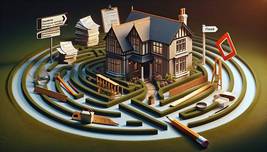
Why Older Homes Often Need Better Planning Rather Than Bigger Budgets
 Older homes rarely shout their problems at the front door; they prefer to wait until someone has removed three floorboards, ordered expensive tiles, and confidently said, “This should be straightforward.”
Renovating a period property can be deeply rewarding, but it is rarely as simple as swapping tired finishes for fresh ones. Older houses often come with uneven walls, tired wiring, mysterious plumbing routes, past repairs of heroic optimism, and structural quirks that appear to have been designed by someone holding a candle in one hand and a sandwich in the other.
The answer is not always a bigger budget. More often, it is better planning.
Old Buildings Have Long Memories
A newer property usually has clearer construction logic. Services tend to be more predictable, walls are more likely to be straight, and previous owners have had fewer decades in which to make “temporary” repairs that somehow became part of the building’s personality.
Older homes are different. A wall may lean slightly because the building has settled over time. Floors may dip because timber joists have moved, weakened, or been altered. A fireplace may hide blocked flues, unsupported brickwork, or evidence of changes made long before anyone thought building records were worth keeping.
This is why rushing straight into design choices can be expensive. Choosing cabinets, flooring, paint colours, and lighting before understanding the building is like buying shoes for someone whose feet you have only seen under a table.
Surveys Are Not Optional Decorations
A proper survey can feel like an annoying upfront cost, especially when the kitchen looks tired and your brain is already browsing splashbacks. But detailed investigation is one of the best ways to reduce waste later.
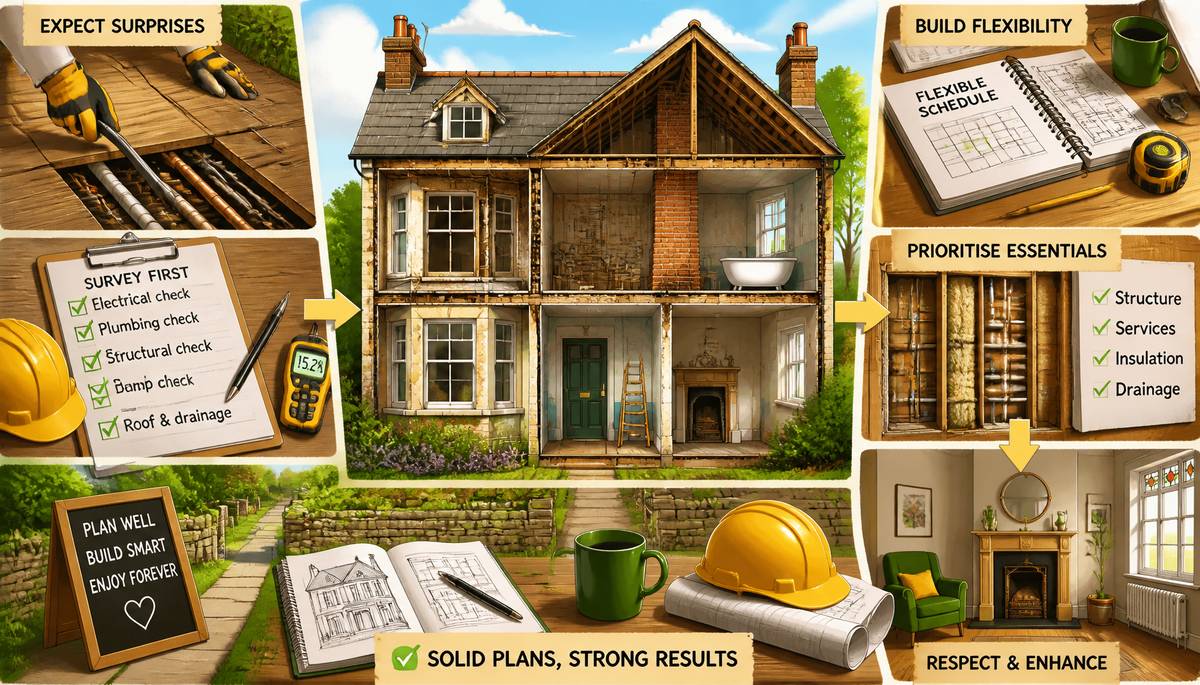
Before major work begins, homeowners should consider checks such as:
- Electrical inspections to identify outdated wiring or overloaded circuits
- Plumbing checks to find ageing pipes, poor pressure, or hidden leaks
- Structural assessments where walls, roofs, floors, or openings may be affected
- Damp investigations before plastering, decorating, or installing fitted furniture
- Roof and drainage reviews to catch problems before interior work begins
These checks do not remove every surprise, because old houses enjoy keeping a few cards tucked behind the skirting board. They do, however, turn many expensive shocks into manageable decisions.
Build Flexibility Into the Schedule
One of the biggest mistakes people make when renovating an older home is assuming that every stage will unfold exactly as planned. While careful scheduling is important, period properties often introduce unexpected discoveries that simply cannot be predicted until work begins. A contractor might remove old plaster and uncover damaged timber. Floorboards may reveal pipes installed in unusual places, or chimney breasts may contain long-forgotten alterations that require attention before anything else can continue.
Allowing extra time in the programme helps everyone involved make sensible decisions instead of rushing into expensive fixes. A schedule with a little breathing room is usually far less stressful than one that leaves every tradesperson waiting for the previous task to finish by lunchtime on Tuesday.
Prioritise What You Cannot Easily Change
It is tempting to focus on finishes because they are visible and exciting. Paint colours, flooring, light fittings and furniture receive plenty of attention, but they are often the easiest elements to replace in the future.
Structural repairs, drainage improvements, electrical upgrades and insulation deserve priority because they become much harder to access once everything has been finished. Installing beautiful oak flooring only to lift it again six months later because hidden pipework has failed is an experience most homeowners would happily donate to someone else's autobiography.
Treat the renovation as a sequence rather than a collection of isolated jobs. Every improvement should prepare the house for the next stage instead of creating obstacles that later need removing.
Respect Character Without Fighting Practicality
Serious planning also involves deciding which original features genuinely deserve preservation. Not every crooked door frame tells an important historical story, and not every uneven floor should automatically be levelled at enormous expense.
The goal is balance. Preserving attractive mouldings, original timber, stone fireplaces or traditional windows often adds lasting value and personality. At the same time, modern heating, efficient insulation and updated services can dramatically improve comfort without diminishing the home's character.
Successful renovations rarely attempt to freeze a building in time. Instead, they allow an older property to continue evolving while respecting what made it worth saving in the first place.
Solid Foundations Make Happy Endings
Older homes ask for patience before they reward enthusiasm. They encourage investigation before decoration, thoughtful sequencing before impulsive purchases, and realistic expectations instead of optimistic guesswork.
A generous budget certainly helps when unexpected repairs appear, but money alone cannot compensate for poor preparation. Careful surveys, realistic scheduling, experienced tradespeople and well-considered priorities usually deliver better results than simply increasing spending whenever another hidden issue appears.
When homeowners invest time in understanding the building before transforming it, delays become easier to manage, decisions become more confident, and unnecessary costs become far less common. The house may still reveal a few surprises along the way—it has had decades to practise—but with a solid plan in place, those discoveries become interesting chapters in the renovation rather than expensive plot twists.
|
|