The Plumbing Problems Hiding Behind Scotland's Traditional Stone Walls
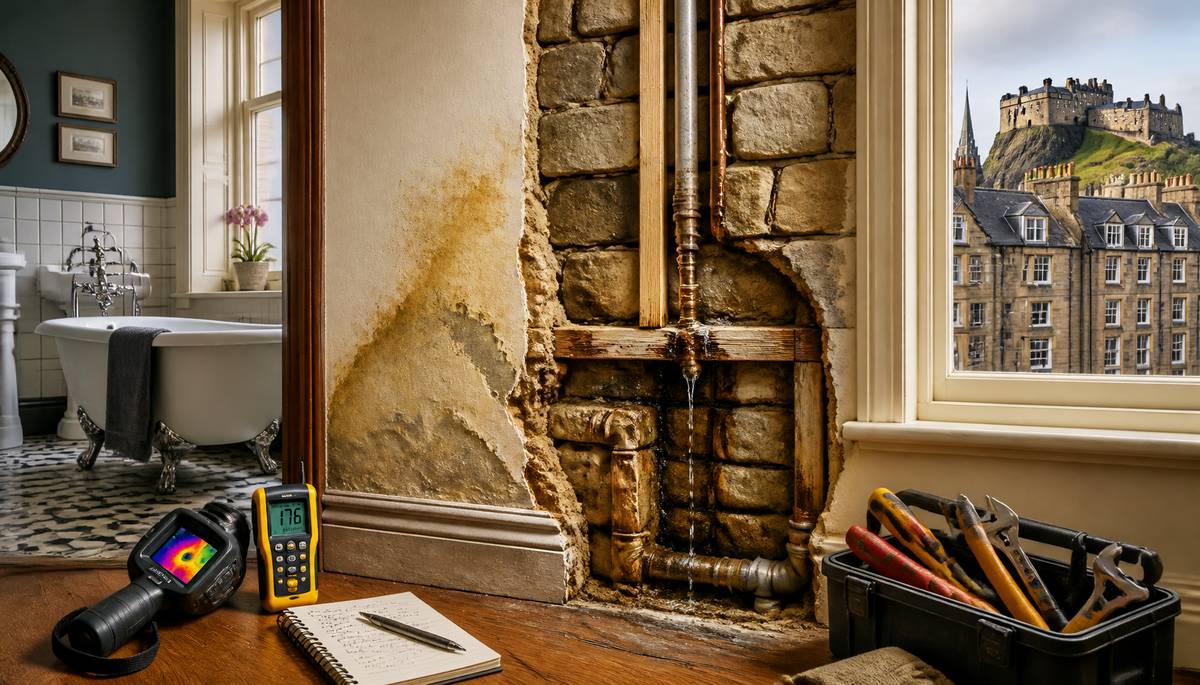 A Victorian sandstone wall can conceal a plumbing disaster with the composure of a butler pretending not to notice the drawing room is on fire. Scotland's traditional buildings are admired for their solid construction, distinctive character and remarkable longevity, but their substantial masonry can also make investigating water damage unusually challenging. Behind those handsome stone surfaces, ageing pipes, deteriorating joints and persistent moisture may be quietly causing trouble for years.
From Edinburgh's towering tenements to rural cottages and grand Victorian villas, older Scottish properties often contain plumbing systems that have undergone several generations of alteration. Copper pipes may share cramped spaces with obsolete lead connections, while newer plastic fittings disappear behind timber panelling or plasterwork. Understanding how these buildings behave is essential before reaching for a hammer.
Why Thick Stone Walls Complicate Plumbing Investigations
Traditional sandstone walls were designed to withstand Scotland's famously enthusiastic weather, not necessarily to accommodate modern bathrooms, central heating and complicated pipework. Many buildings originally had relatively simple water supplies, with additional plumbing introduced gradually as domestic expectations increased.
Unlike modern cavity walls, traditional solid masonry can absorb and release moisture through its materials. Water entering through defective pointing, damaged gutters or leaking pipes may travel through mortar joints and porous stone before appearing somewhere entirely unexpected.
A damp patch beside a bedroom fireplace, for example, might originate from a leaking bathroom connection several metres away. Water follows gravity, available gaps and absorbent materials rather than the convenient straight lines preferred by householders.
Thick masonry also dries slowly, particularly when inappropriate cement render or impermeable modern coatings prevent moisture from escaping. Consequently, visible staining may remain long after the original source has been repaired.
Three Moisture Problems Wearing the Same Disguise
One of the greatest difficulties with older Scottish properties is distinguishing plumbing leaks from condensation and penetrating damp. All three can produce discoloured plaster, peeling wallpaper, musty smells and patches of mould.
Condensation typically develops when warm, humid indoor air meets colder surfaces. Poor ventilation, inadequate heating and cold corners behind furniture can make the problem worse. Black mould around window reveals or external wall junctions often suggests condensation, although appearances alone cannot establish the cause.
Penetrating damp occurs when rainwater enters through defects such as cracked pointing, damaged roof coverings or blocked gutters. Symptoms may become more pronounced after prolonged rainfall, making Scotland an exceptionally generous testing environment.
Plumbing leaks, meanwhile, can produce persistent or intermittent dampness unrelated to the weather. A leaking central heating connection might worsen when the system operates, while a defective waste pipe may release moisture only when a particular sink, bath or shower is used.
Identifying these differences matters enormously. Treating a concealed pipe leak with waterproof paint is rather like putting a plaster over a burst garden hose. The surface might look reassuring for a while, but the underlying problem remains remarkably unimpressed.
Investigating Damp Without Destroying Historic Interiors
Investigating suspicious moisture in a traditional property should begin with observation rather than demolition. Record where damp patches appear, photograph their development and note whether they change following rainfall, heating use or particular plumbing activities.
Check accessible pipework beneath sinks, around toilets and behind removable bath panels. Inspect external gutters, downpipes and stone pointing, particularly where staining appears on corresponding internal walls. A simple inspection may reveal a loose connection or overflowing gutter before expensive investigative work becomes necessary.
Moisture meters can help identify patterns, although readings from traditional masonry require careful interpretation. Salts within old plaster and stone can produce misleading results, so a high reading does not automatically confirm an active leak.
Professional plumbers may employ thermal imaging cameras, acoustic detection equipment or pressure testing to narrow down suspected leaks. These techniques can reduce unnecessary disruption, although none guarantees an exact diagnosis without further investigation.
When Old Plumbing Meets Older Architecture
Victorian villas and sandstone tenements frequently contain plumbing alterations undertaken across many decades. Pipes may pass through timber floors, run inside boxed-in sections or disappear into spaces that nobody has inspected since the invention of colour television.
Corroded metal connections, deteriorating seals and poorly supported pipework can eventually develop leaks. Small movements within older buildings may also place stress on rigid joints, particularly where pipes pass between different construction materials.
Historic interiors deserve particular care. Decorative cornices, original timber panelling and traditional lime plaster can be expensive or difficult to replace accurately. Where possible, repairs should use existing access points or carefully selected openings rather than removing substantial sections of original fabric.
For listed buildings, certain alterations may require formal consent. Consulting an appropriately experienced professional before disturbing significant architectural features can prevent a plumbing problem from becoming a conservation problem as well.
Keeping Scotland's Stonework in Good Spirits
Prevention is generally less expensive than repairing years of concealed moisture damage. Periodically checking exposed connections, maintaining gutters, ensuring adequate ventilation and responding promptly to unexplained damp patches can substantially reduce the risk.
Traditional masonry also benefits from suitable breathable materials and sympathetic maintenance. Sealing every surface with impermeable products may trap moisture rather than eliminate it, potentially accelerating deterioration of plaster, mortar and timber.
Persistent dampness, unexplained water consumption or signs of structural deterioration warrant professional investigation. Electrical fittings affected by moisture require particular caution, and suspected leaks near wiring should never be treated as routine decorative problems.
Scotland's traditional stone buildings have survived generations of occupants, architectural fashions and weather forecasts that might reasonably qualify as threats. Their continued survival depends partly on recognising that impressive masonry is not invulnerable. Finding the true source of unwanted moisture, rather than simply concealing its symptoms, helps preserve both the plumbing and the remarkable buildings surrounding it.
|
|

