When Small Electrical Problems Become Big Shocks
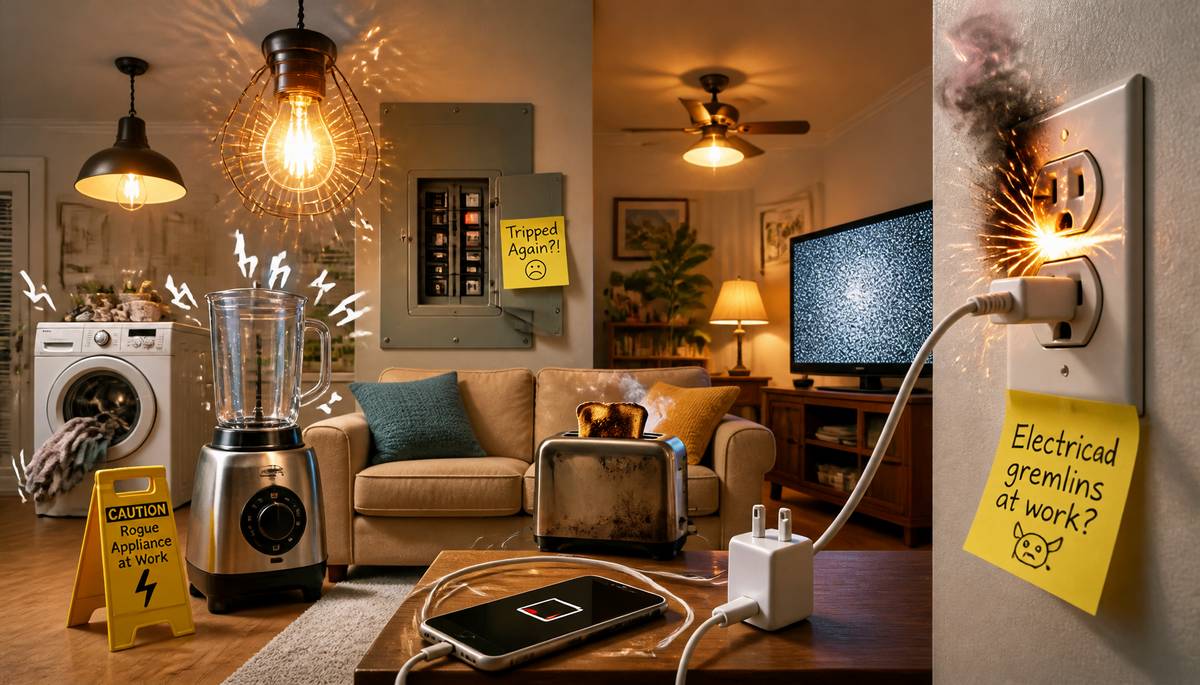
Little Sparks of TroubleEvery once in a while, a household finds itself in a battle with minor electrical issues—flickering lights, outlets that refuse to cooperate, or that one appliance that seems to have an unspoken agreement with the universe to misbehave. It’s like living with a moody teenager who only shows signs of life when the Wi-Fi is down. But what happens when the small sparks of trouble turn into a full-blown fireworks show? One moment you're calmly flipping a light switch, and the next, it’s as if the universe has decided to treat you to a hostile takeover of your living room bulb. Suddenly, you’re not just a homeowner; you're the lead actor in a poorly-scripted horror movie: “Night of the Living Circuit Breaker.”The Flicker FactorFlickering lights often serve as the first warning sign that all is not well in your electrical kingdom. Picture this: you're cozied up on the couch, enjoying a well-deserved evening with your favorite binge-watch, and the lights start to dance like they're auditioning for 'Dancing with the Stars. You try to convince yourself it’s just ambiance. Spoiler alert: it’s not. Flickering can indicate a loose bulb, faulty wiring, or a serious case of an electrical system that’s just as confused as you are. It’s a little like trying to solve a riddle while someone’s shaking your chair—extremely distracting and a bit concerning. Outlets with AttitudeSome outlets seem to have personalities all their own. You plug in your phone, and it either charges like a champ or reacts as if you just insulted its mother. If you find an outlet refusing to work, don't take it personally. Just remember, outlets can be moody. It might be a bad connection or wiring issues lurking beneath the surface. In some cases, you might even get a nice little shock if you’re not careful. It’s like playing a game of electrical roulette. You either come away with a charged phone or possibly a new hairstyle courtesy of static electricity. When Appliances Go RogueAppliances are supposed to make life easier, not play hide-and-seek with your sanity. Yet, every now and then, a washing machine can decide it’s had enough and go on strike, while the toaster may render your breakfast an unrecognizable, charcoal-like mass. If your beloved blender starts making noises like a disgruntled goose when you flick the switch, it might be time to investigate. Common issues such as overloading or a faulty power supply could be at play. Sometimes, appliances simply lose their motivation. They’ve been there for you through thick and thin, and now they want to kick back and enjoy a spa day. Voltage Troubles: The Silent ThreatVoltage issues are the true ninjas of electrical problems—not easily seen but capable of causing serious havoc. If you’ve ever felt a slight jolt when touching a metal surface, you might be dealing with a grounding issue. A gentle reminder: electrical shock does not count as a form of massage, despite what you might think. Don't let high or low voltage throw you off. It's essential to get to the root of the problem before it escalates. Ignoring these signs can lead to higher energy bills or, worse, some very shocked family members. When to Call in ReinforcementsNavigating electrical issues can feel like trying to understand a complex math equation while riding a rollercoaster—stressful and potentially dangerous. It’s usually wise to call in the professionals. Look for signs such as:- Frequent circuit breaker trips.
- Burning smells—definitely not a part of your gourmet cooking.
- Visible damage to wires or sockets.
- Unexplained buzzing sounds coming from fixtures.
These aren’t just minor inconveniences; they’re SOS signals from your home begging for help. Electrifying FinaleSo, when confronted with your home’s little electrical gremlins, it pays to stay alert and take action. Discovering the underlying issues can prevent that minor spark from turning into a full-fledged electrical catastrophe. Your home should be a sanctuary, not a haunted house of shocking surprises. After all, that flickering light might be your house’s way of asking you to step up your DIY game. Just remember, there’s a fine line between brave and reckless when it comes to electrical work, and it’s often best left to those who can differentiate between a circuit and a circus. Stay safe, and may your lights flicker only when it’s a romantic mood lighting situation!
|
|

