tradequotes.org
THE most thorough review service for trades (plumbing, electrical services, HVAC etc) websites
★ Get your own unique FAQ + Selling Points on your profile page
★ be seen by 1000s of daily visitors and win new business
tradequotes.org Miniblog
Tradespeople Who Understand Other Trades Will Win The Next Decade
 A decade ago, a customer might have asked for a new boiler, a consumer unit upgrade, or a bit of reroofing and left it there. Now they ask what it will cost to run, how it affects insulation, whether solar will help, and if the whole house is pulling in the same direction.
That shift matters. An electrician fitting EV chargers, batteries or solar is no longer just mounting kit and making connections. The valuable part is knowing the property’s electrical capacity, how the monitoring works, and how the household actually uses power. A plumber or heating engineer meets the same problem from another angle: a system can be mechanically sound and still waste money if the controls are poor, the insulation is weak, or the design is wrong for low-temperature heating.
Builders and roofers are in it too. A small decision about insulation, draught-proofing or thermal detailing can lock in higher energy use for years.
Nobody is saying every tradesperson must become a roaming encyclopaedia of heat pumps, smart controls and battery storage. Specialism still counts. But the tradespeople who understand the knock-on effects of another trade’s work will be more useful, easier to trust, and better placed for the jobs now filling the pipeline.
Energy efficiency is no side issue any more. It is becoming core craft knowledge.
Posted on 6 October 2026
Why Has The Phone Become A Tradesperson's Most Important Tool?
 A tradesperson who turns up without a phone may not be quite helpless, but he is rather like a carpenter who has remembered his hammer and forgotten his pencil. The old tools still matter most for the work itself. Yet a surprising share of the work now happens through a screen.
A phone can turn rough measurements and material prices into a proper quote before the van has even cooled. It can keep a diary straight, store addresses, send reminders, and spare a small team that familiar muddle in which each man assumes the other is due at Mrs Thompson’s at nine.
Its camera may be the most useful part of all. A problem can be recorded before work begins, progress noted as it goes, and the finished result kept on file. Customers can also send photographs in advance, which helps decide what parts, tools or materials to bring.
Then there is the paperwork, or rather the escape from it. Invoices can be sent soon after the job is done, and digital records make it much easier to track payments, past jobs and customer details.
None of this means every trade business needs a labyrinth of subscriptions. Often a few sensible apps will do. The real change is simpler than that: administration no longer waits for the evening. The toolbox still holds spanners and drills. It just also holds a password.
Posted on 27 September 2026
Repair Isn't Nostalgia - It's Becoming The Smarter Economy
 We got very used to the little modern shrug: it’s broken, so out it goes. That made sense when replacement was cheap enough to feel painless. It feels less clever now.
A lot of things fail because of one modest part, not because the whole object has given up on life. An appliance can be saved by a new component. A worn door often needs adjusting, not replacing. Damaged timber can be repaired. Tiles can be swapped one by one. Refurbishing an old fitting can be far more sensible than ripping out an entire installation. Buying a whole new system because one bit failed is a bit like replacing a car because the wipers packed in. Very dramatic. Not especially wise.
There is also the waste issue, and it is hard to ignore. Repair usually means fewer materials thrown away, and less manufacturing, packaging and transport for a brand-new substitute.
That makes practical know-how more valuable. Tradespeople who can diagnose faults, not just fit new units, are likely to be in greater demand. At home, simple skills matter too: tightening fittings, changing basic parts, looking after tools. Small jobs prevent expensive ones.
Of course, not everything should be saved. Safety, efficiency, labour costs and spare parts still matter. Some things are truly finished. But the old routine of broken, bin, buy again is starting to look less like convenience and more like laziness.
Posted on 22 September 2026
Stop Waiting For The Boiler To Die
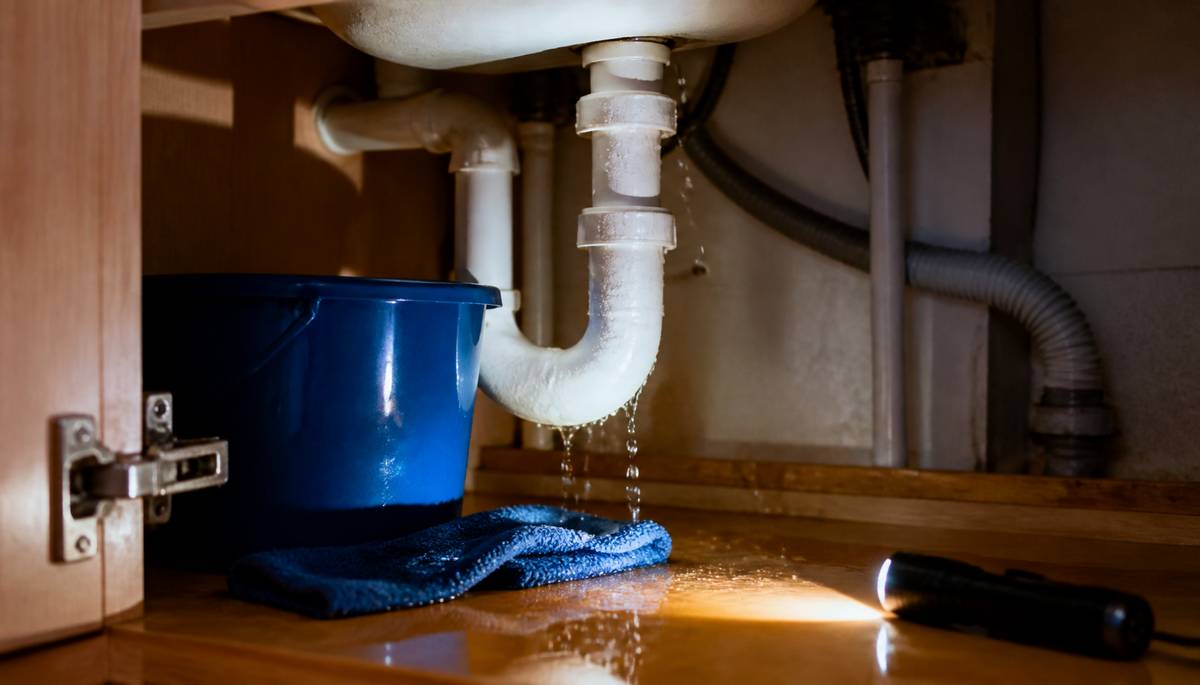 Most people treat their house like a polite acquaintance: fine as long as it isn’t actively shouting. That works right up until the boiler quits on the coldest night of the year, a pipe starts leaking under the sink, or the roof decides rain should be an indoor feature.
That’s why preventive maintenance makes more sense than the old wait-and-see approach. Boilers and heating systems usually give hints before they fail completely: odd noises, weaker performance, worn parts, slipping efficiency. Catch those early and the fix is often manageable. Ignore them and you’re buying an emergency.
The same logic applies to plumbing. A minor leak is annoying; a hidden leak left alone can wreck cupboards, floors and anything nearby. Roofs, gutters and exterior seals are similar. A loose tile or blocked downpipe is not dramatic. Water getting into the structure absolutely is.
There’s also the money issue. Planned servicing is easier to budget for than a breakdown demanding instant attention. Keeping records helps too. You start to see the property as a system with a history, not a mystery box.
You do not need to become paranoid. Just observant. Damp patches, cracks, dripping taps, strange sounds and changes in how equipment runs are often the house trying to warn you. Better to listen when the problem costs £80 than wait until it costs £8,000.
Posted on 18 September 2026
Stop Chasing Five-Star Reviews-Look For This Pattern Instead
 Trying to hire a decent tradesperson can make you feel like you’re auditioning for neglect. You leave a voicemail, send a text, maybe attach a photo of the leaking ceiling for drama, and then... silence.
The problem often isn’t that nobody can do the work. It’s that good electricians, plumbers, builders and heating engineers are busy, especially when home improvement demand is high. Bigger jobs fill the diary first, and smaller ones can get wedged into the cracks, much like your actual bathroom sealant.
That’s why five-star reviews, on their own, are a bit too sparkly to trust. One ecstatic review proves almost nothing. One furious review may just mean someone expected cathedral-level perfection for the price of a takeaway. The better approach is to look for a repeated pattern: do people mention turning up as promised, replying to messages, giving clear quotes and sticking to sensible timescales?
Price is a wobbly guide too. Very cheap can mean paying twice when the work needs redoing. Very expensive can simply mean... expensive.
Recommendations still matter, especially from someone who had similar work done. But the strongest clue is gloriously ordinary: they communicate well, explain the job clearly, have the right qualifications where needed, and behave as though your time exists. Competence is lovely. Professionalism is what lets you sleep at night.
Posted on 13 September 2026
The Video Doorbell Boom Is Creating A New Kind Of Tradesperson
 A video doorbell looks simple enough until you realise it has to see the right patch of driveway, survive British weather, stay powered, connect properly and not argue with the rest of the house. That little gadget is helping create a new kind of tradesperson: part practical installer, part digital problem-solver, and probably part therapist for people who have forgotten the Wi-Fi password again.
The boom in connected home kit is opening fresh work for electricians, heating engineers and security installers who can handle both the physical job and the smart controls behind it. Video doorbells, cameras, alarms and access systems all need careful positioning, safe power supplies and reliable setup so the bits actually work together instead of sulking in separate apps.
It is not just security. Smart lighting often means more than swapping a switch, especially in older homes where wiring may need attention. Heating is shifting too, with smart thermostats and room-by-room controls offering tighter energy management for households. Then there are electric vehicle charge points, which require proper checks on electrical capacity, safety and placement.
Nobody needs to turn into a full-time IT wizard overnight. But connected technology is becoming a useful extra skill. The clever features may live in an app, but someone still has to mount it, wire it and make it behave in the real world.
Posted on 5 September 2026
Multi-Skilled Doesn't Mean Master Of Everything - And That's The Point
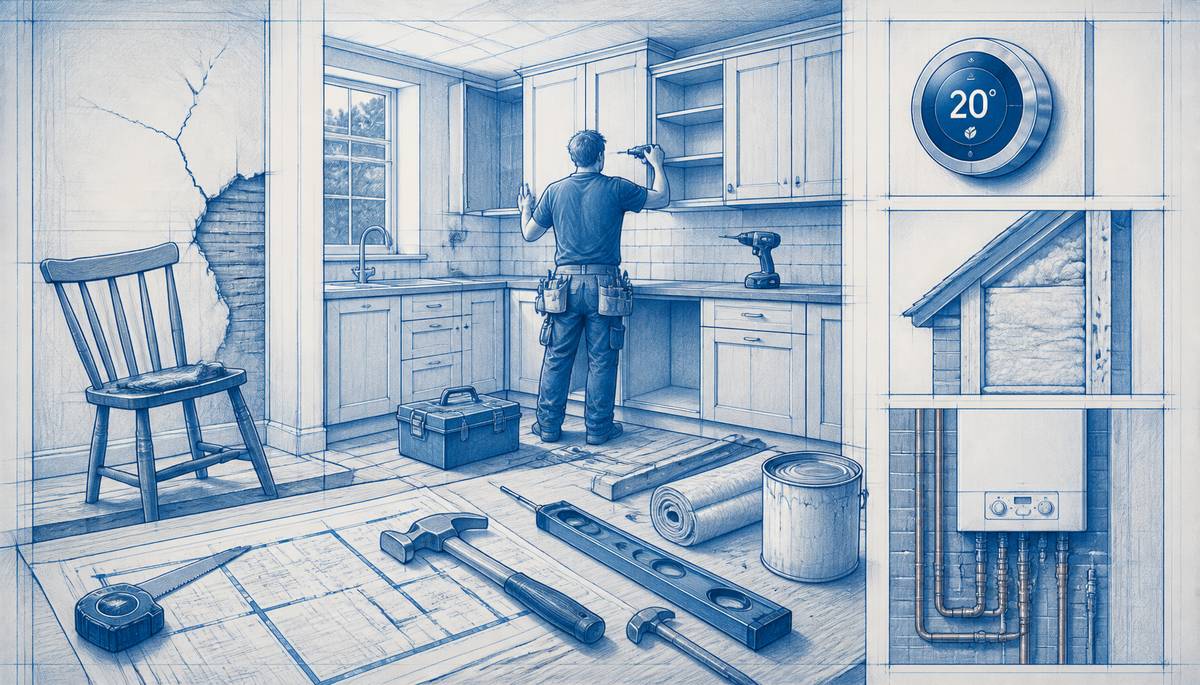 A good multi-skilled tradesperson is a bit like the person at a dinner party who can open the wine, fix the wobbly chair and explain why your thermostat is acting possessed. Useful, not mythical.
Small property jobs rarely stay in their lane. Fitting kitchen units can uncover cracked plaster, uneven flooring or some old repair that was apparently done by a blindfolded raccoon. That is where a broader skill set earns its keep. One person who can handle joinery, decorating and general repairs can keep a project moving instead of turning it into a relay race of separate call-outs.
The job is changing, too. Homes now come with smart heating controls, connected alarms and gadgets quietly tracking energy use like tiny judgmental accountants. A tradesperson does not need to become a software engineer, but knowing how these systems fit into a home makes installation and upkeep far smoother.
Energy efficiency adds another layer. Draught proofing, insulation upgrades and similar improvements often overlap with day-to-day maintenance, so understanding how a property performs as a whole is increasingly practical.
But let’s not get carried away. Multi-skilled does not mean qualified for everything. Gas, electrical and other regulated work still require the right certification and legal sign-off. The real value is range with judgement: being able to sort the everyday mix, and knowing exactly when to call in a specialist.
Posted on 31 August 2026
Forget Fancy Renovations: The New Status Upgrade Is A Cheaper Energy Bill
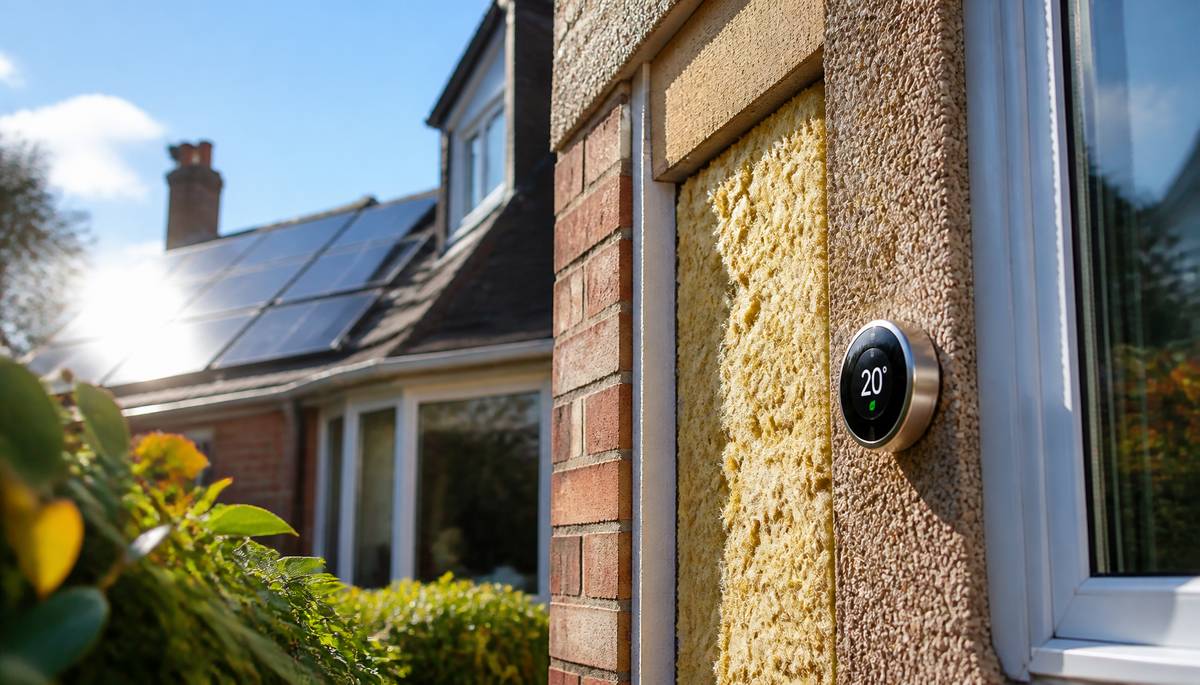 There was a time when the ambitious householder announced his prosperity with a marble island, a boot room or some ghastly bi-fold doors. Now the smarter boast is altogether less theatrical: a house that costs less to heat.
The shift is perfectly rational. Household bills are stubborn, technology has improved, and people are less enchanted by alterations that merely photograph well. A loft properly insulated, walls and floors brought up to scratch, and draughts dealt with at source will often do more for daily comfort than a fashionable paint colour ever could. Better windows help too, not because they are exciting, but because they stop warmth escaping.
Heating upgrades are part of the same sober revolution. For some homes that means a modern boiler; for others, a heat pump, improved controls or more efficient radiators. Smart thermostats add a useful touch of discipline, allowing households to heat lived-in rooms rather than the entire premises out of habit.
Even the humbler measures deserve respect. LED bulbs use far less electricity than older lighting and last much longer. Smart plugs, sensors and automated controls can expose waste that has quietly become routine.
Solar panels have also entered ordinary conversation, with battery storage offering the possibility of keeping some of that power for later. Not every house needs every device. But the direction is unmistakable: improvement is no longer just about appearances. It is about running a house well.
Posted on 25 August 2026
Pre-Apprenticeship Is Not A Fast Pass To The Trades
 Trade school sells the dream neatly: 30 weeks, tools in hand, wiring practice, maybe a brighter future. What it does not sell quite as loudly is the awkward bit afterwards, when graduates discover the course was training, not a ticket.
That is the problem facing people like Kayla Climenhaga, 27, and Cassidy Payne, 23, in London, Ontario. Both finished electrician pre-apprenticeship programmes. Both then hit the same wall: plenty of CVs sent, plenty of calls made, and almost nothing coming back. No interviews for Payne. Little movement for Climenhaga. Skills, yes. A foot in the door, not so much.
The snag is simple. An apprenticeship begins only when an employer hires you and registers you. To become a licensed construction and maintenance electrician in Ontario takes about 9,000 hours over four or five years. And while first-time registrations reached 3,605 in 2024, they fell to 2,685 in 2025.
Contractor John Finan, now a company owner, puts it bluntly: a pre-apprenticeship can help, but it guarantees nothing. Employers need a journeyperson available to supervise, and that one-to-one match makes openings precious.
So the hard truth is this: pre-apprenticeship is preparation, not passage. Sometimes the way into electrical work is sideways first — another site job, showing up early, proving you're teachable, and grinding until somebody finally says yes.
Posted on 18 August 2026
How Did A Rochdale Locksmith Build Britain's First AI Key-Booking Machine?
 Rochdale locksmith James Buckley didn’t come out of a software incubator. He came out of the trade itself, with grease under the fingernails and a clear view of a slow, awkward process that most motorists only notice when they’re stranded.
Buckley, who runs AccuKey Auto Locksmith, says he has built Britain’s first automated vehicle-key pricing and booking platform designed specifically for auto locksmiths. Called AccuKey IQ, it takes a job that usually begins with calls, messages, number plates and photos, then hands much of that legwork to software. A customer enters their registration, the system identifies the vehicle, works out the likely key type and applies the pricing logic before guiding them towards a booking.
That matters because key replacement in the UK is still stubbornly manual. Someone has to identify the car, figure out the technology involved and calculate the quote. Buckley’s advantage was simple: he already knew the pain points because he deals with them every day.
He taught himself to build the platform using “vibe coding”, despite not being a developer by trade. AccuKey is only three years old, but Buckley says the business has already collected more than 250 five-star reviews, gained a registered UK trade mark and reached the finals of two business awards.
For customers across the North West, the pitch is speed and clarity: fixed prices in under a minute, with same-day and emergency callouts often available.
Posted on 13 August 2026
The New Skill Every Tradesperson Hates: Debt Collection
 For plenty of tradespeople, the nastiest new tool of the job is not a drill, a saw or a ladder. It is the awkward art of asking to be paid.
Angela Jefferys, who helps run West Wales Electrical Solutions in Carmarthenshire, now spends much of her week chasing overdue bills and arranging instalments for customers under strain. Twice, she has gone as far as the small claims court. Bigger jobs, from rewires to solar systems, are where the trouble often starts. Customers who once accepted an estimate now want the full figure before they agree.
The squeeze is widespread. A Direct Line survey found 53% of tradespeople had seen more late payments than a year earlier, while 68% were actively pursuing overdue invoices. Nearly a quarter were juggling at least four unpaid bills at once. On average, each was owed £2,023, and the typical amount written off stood at £1,646.
In Cardiff, tree surgeon Dom Meletti says people try to knock down his prices almost daily. He refuses. His business carries about £10,000 a month in overheads before wages, worked or not. Most customers still go ahead after the conversation, but the strain is real.
Not every story sours. Cardiff plumber Gavin Shopland says his repeat customers pay promptly and rarely argue the price. Loyalty, it seems, still counts.
Posted on 8 August 2026
Why Word Of Mouth Still Crushes Advertising In The Trades
 Advertising can buy attention. It cannot buy belief. In the trades, belief is what gets the phone ringing.
People still compare prices, check experience and look at qualifications. Of course they do. But the deciding factor is often trust. A homeowner can scan reviews in minutes, weigh one firm against another, and spot the difference between a polished pitch and a solid reputation. A long run of positive feedback carries real weight, especially when it speaks of jobs finished properly, promises kept and problems handled well.
Yet online praise is only half the story. A recommendation from a neighbour, a sister, a mate at work still lands harder than any paid advert. If someone you know says, “They turned up on time, explained everything clearly and left the place clean,” that sticks.
Trust grows in the small things as much as the big ones. Clear quotes. Sensible timescales. Plain English instead of baffling jargon. Quick replies. A message if plans change. These are not flourishes. They are proof of professionalism.
No one earns that standing overnight. It comes from steady workmanship, respectful communication and reliability, job after job. Do that often enough, and happy customers become your sales team. No advert can match that kind of backing. Posted on 1 August 2026
What Thermal Cameras Reveal That Standard Inspections Keep Missing
 A standard inspection sees what the eye can reach. A thermal camera notices what the eye cannot: warmth leaking through a roofline, damp gathering inside a wall, an electrical fault beginning to glow before it becomes a failure.
That matters because many of the most expensive problems in a building start out hidden. A contractor may find cracked tiles or worn sealant on a routine visit, but thermal imaging can point to heat loss, trapped moisture and overheating circuits that leave no obvious mark on the surface. It adds another layer of knowledge, especially in places that are awkward or risky to inspect closely.
Used well, this technology does not replace judgement. It sharpens it. Tradespeople are pairing thermal cameras with drones for roofs, gutters and other hard-to-reach areas, and with digital measuring tools that speed up dimensions and reduce mistakes. The result is not magic, only better evidence.
The same quiet shift is happening across the job. Quotes can now be prepared and sent from a phone or tablet instead of being scribbled on paper. Scheduling apps keep appointments, invoices and customer details in one place, so clients get clearer updates and businesses stay organised.
The craft remains human. Skill, experience and attention still decide what happens next. But better tools help good tradespeople see more, plan better and miss less.
Posted on 25 July 2026
Will AI Data Centers Run Out Of Work Before New Electricians Clock In?
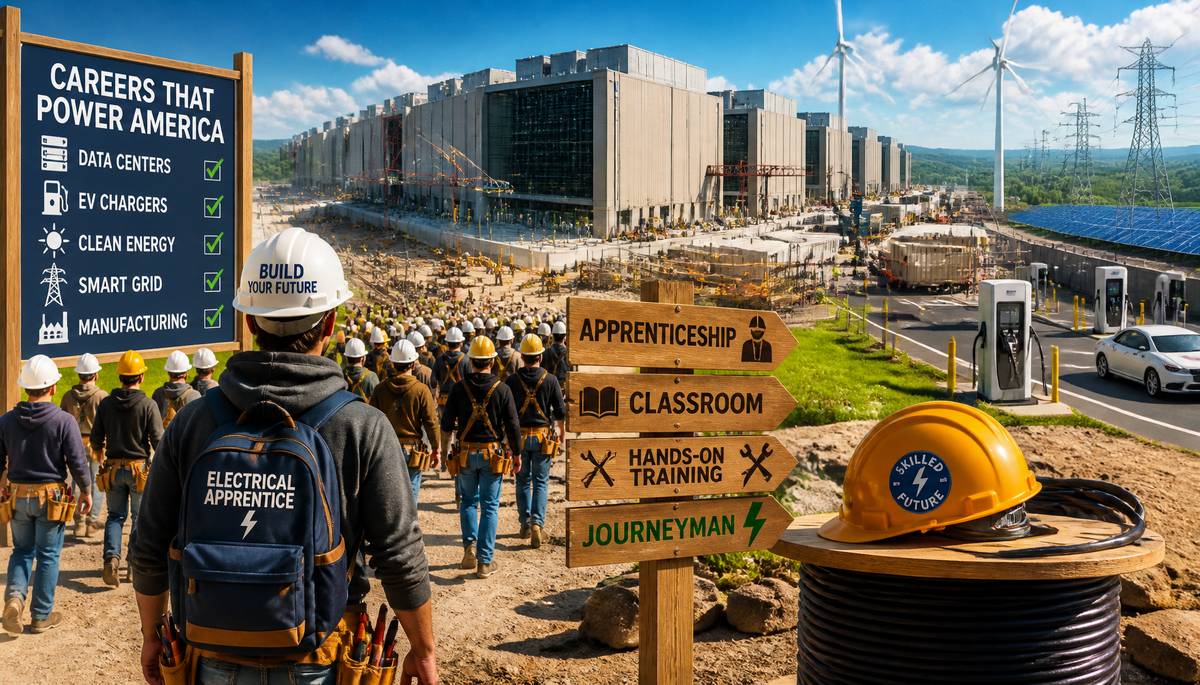 There’s something wonderfully optimistic about thousands of people deciding to become electricians because server farms are sprouting across America like enormous beige mushrooms. The snag is that electrical training runs on human time, not hyperscale time.
To qualify as a journeyman usually takes 8,000 hours on the job and years in class; union routes can stretch to 10,000 hours over five years. So anyone starting in 2024 or 2025 may not be fully licensed until 2028, 2029 or 2030. By then, the data-centre gold rush that lured them in could already be cooling.
Apprenticeship applications for commercial electrical work rose by more than 70% between 2022 and 2024, yet only about 45% of registered apprentices typically finish. That makes the apparent flood of future electricians look rather less flood-like.
Meanwhile, the construction itself is moving absurdly fast. Stargate’s Abilene campus began in 2024; within a year, its first buildings were energised, and the full site is expected by late 2026. Goldman Sachs has suggested demand may flatten from 2027 as new capacity arrives and occupancy levels off. And once a data centre is built, it needs far fewer workers to run than to wire.
Still, this is not a tragic misfire. America’s power appetite is rising far beyond server racks: EV chargers, heat pumps, solar, factories and grid upgrades will keep electricians busy for decades. They may miss one boom. They won’t miss the century’s bigger one.
Posted on 16 July 2026
The Sneakiest Side Hustle For Skilled Tradesmen Might Be Blueprint Reading
 The clever bit about blueprint reading is that it feels almost too tidy to count as a side hustle. No mud on your boots, no wrestling with a ladder in sideways rain, and no one asking if you can “just quickly” sort their fence while you’re there.
For skilled tradesmen, it’s one of the quieter ways to earn extra money from knowledge you already use on site. Small builders, renovators and even homeowners often need help making sense of plans, spotting issues early, or pricing a job properly, but they may not have the budget for a full-time estimator. That creates a useful gap.
If you’re comfortable reading drawings, measuring quantities and noticing the awkward bits that turn into expensive surprises later, you can charge per project and work remotely. A laptop, estimating software and a decent eye for detail are usually enough to get started. It suits evenings far better than hauling tools about.
That’s what makes it sneaky. It doesn’t look flashy like selling custom metalwork online, filming DIY videos, or flipping second-hand tools from auctions and clearance sales. It’s simply practical, like tool maintenance from your garage or offering advice to DIY renovators who are in slightly over their heads.
Tradesmen often underestimate how valuable the thinking side of the job is. Reading plans properly can save someone money, time and a fair bit of swearing. That’s worth paying for.
Posted on 14 July 2026
The $465K NYCHA Paycheck That Just Blew Up A Side-Hustle Loophole
 A NYCHA plumbing supervisor didn’t just cash a big cheque last year. He practically stress-tested the city payroll system.
Jakub Markowski pulled in more than $465,000 in fiscal 2025, thanks largely to roughly 2,560 hours of overtime, reportedly the highest overtime total of any city employee. That alone would raise eyebrows. What really set this off is that records also link him to more than 70 private plumbing jobs across places such as the Upper East Side and Brooklyn Heights.
Those jobs were tied to two firms, Super Plumbers Corp. NYC and Dynamic Blue Water Mechanical, while Markowski was working in NYCHA’s fire safety division. He is a licensed master plumber, and he had received approval in 2019 to keep a private business while employed by the city. The problem, according to NYCHA, is that he did not secure a fresh waiver after moving into a supervisory post in 2024.
Now the Department of Buildings is looking into whether that outside work broke licensing rules. It is also examining his connection to Robert Tarnawa, who is associated with one of the companies but is not a licensed master plumber.
For NYCHA, this lands badly. The authority is already battling rundown buildings, huge repair needs and a history of overtime and corruption probes. Overtime may be common there. This, apparently, was something else.
Posted on 8 July 2026
Electricians Can Lose a Good Retirement With Four Bad Moves
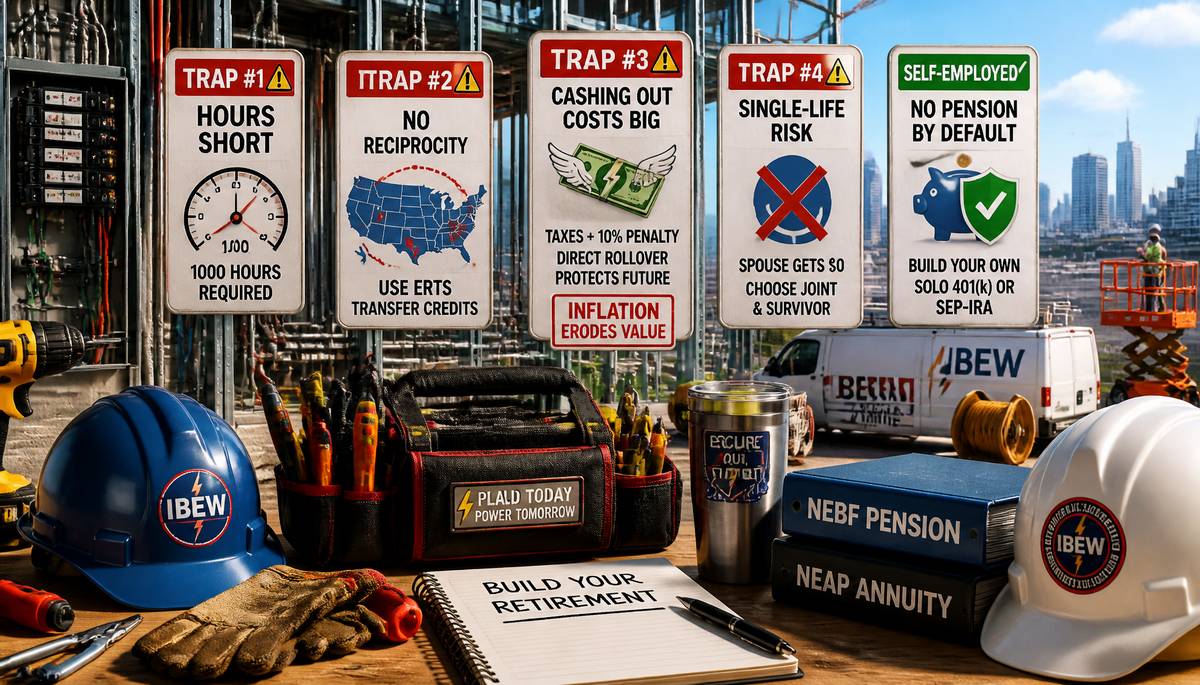 Electricians got one of the last real retirement hookups in America: IBEW workers often have the NEBF pension plus the NEAP annuity. But a pension is like a fancy power tool, mess around with it wrong and now you just got an expensive mistake.
First trap: not hitting the yearly service-credit minimum. A lot of plans want about 1,000 hours in covered work for a full year of credit. Come up short from layoffs, injury, or dry spells, and you may get partial credit or none. Do that a few times and retirement can slide back, or early retirement gets cut harder than expected.
Second: traveling without reciprocity. Work out of another local and contributions usually land in that local’s fund unless you file through ERTS. No paperwork, no transfer. That six-month out-of-state job can wind up helping a pension you never vest in.
Third: cashing out NEAP or a local annuity when leaving the trade. Take the money as a check and, if you’re under 59½, taxes plus the 10% penalty can eat a third or more of a big balance. A direct IRA rollover keeps the tax shelter alive. With CPI at 333.979 in May 2026, spending it now also locks in inflation damage.
Fourth: grabbing the single-life annuity. Biggest monthly check, sure. Then you die, and the spouse gets zero pension. Joint-and-survivor options pay less each month but keep income going.
Self-employed electricians have another danger: no pension at all unless they build one with a Solo 401(k) or SEP-IRA. Otherwise, retirement is basically Social Security and crossed fingers. Posted on 3 July 2026
When the Job Is Done but the Money Isn’t There
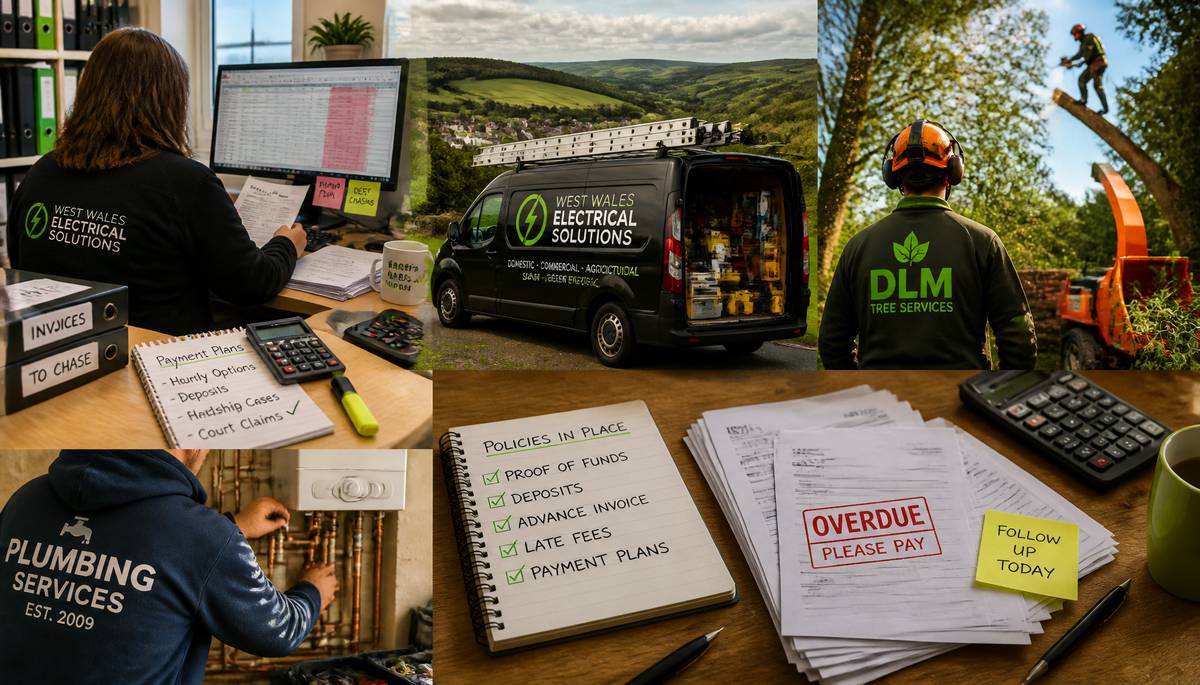 Across Wales, the cost-of-living squeeze is reaching tradespeople by a back door: unpaid bills, negotiated-down estimates, and the slow administrative labor of trying to get finished work turned into money.
At West Wales Electrical Solutions in Newcastle Emlyn, office manager Angela Jefferys now devotes much of her time to debt chasing and arranging payment plans for customers who cannot settle invoices. The Carmarthenshire family firm, which handles agricultural, commercial and domestic electrical work, has twice gone to small claims court to recover payment. Larger jobs such as rewiring, solar installations and other green-energy systems are proving hardest for some customers to afford. The company has responded with policies including hourly payment options, while trying to distinguish genuine hardship, sometimes tied to job loss or bereavement, from simple delay.
Price resistance is also routine. In Cardiff, DLM Tree Services director Dom Meletti said customers challenge his fixed charges almost daily, even though the business faces monthly overheads of £10,000 before wages, covering vans, fuel and equipment. He said the company does not cut its prices, though most customers eventually proceed anyway.
Industry data suggest these cases are common. A Direct Line Group survey of 500 tradespeople found 53% had seen late payments rise over the past year, 68% were actively chasing them, and 23% were juggling at least four unpaid invoices. Average late payments stood at £2,023; average write-offs at £1,646.
Some firms now ask for proof of funds, deposits, advance invoices or late fees. Yet Cardiff plumber Gavin Shopland, self-employed since 2009, says loyal repeat customers still pay promptly and accept fair pricing without dispute.
Posted on 30 June 2026
The AI Boom May Be Building Its Winners With Wrenches
 It’s a strange cultural pivot: the face of the AI boom is effectively arguing that the safest path to wealth may involve conduit, copper, and PVC rather than Python.
On June 25, 2026, during a Fox Business segment, Ken Rusk said Nvidia CEO Jensen Huang sees future millionaires emerging from carpentry, plumbing, and especially electrical work. The logic is less romantic than arithmetic. Skip a four-year degree, avoid roughly $35,000 to $100,000 in education costs, start getting paid around 20 or 22, and the real advantage becomes time: four extra years of income and investing, with no student-loan drag.
The labor market makes that argument more plausible than it was a decade ago. BLS data put median weekly earnings for full-time workers at $1,235 in early 2026, while average private-sector hourly pay hit a record $37.53 in May. In strong metros, journeyman electricians can reach $85,000 to $110,000 by year ten. Near AI construction hubs such as Northern Virginia and central Texas, pay can exceed $120,000 with overtime; in rural markets, the same license may bring in only $55,000. Over 25 years, that ZIP-code difference can mean about $1.25 million in gross earnings.
That geographic disparity matters because demand is exploding. More than $800 billion has already gone into AI infrastructure, Nvidia expects a $3 trillion to $4 trillion buildout by 2030, and the skilled-trades shortage is projected at 2.1 million workers. Posted on 28 June 2026
The Great American Talent Hunt for People Who Can Actually Build Something
 America’s got 700,000-plus trade jobs sitting there like broken barstools nobody wants to fix. Construction and manufacturing need people now, yet hiring an HVAC tech or electrician takes longer than hiring a software developer: about 56 days versus 54, according to Randstad. Trade-school enrollment is up nearly 20 percent since 2020, but the pipeline still leaks; for every 100 workers entering the trades, 102 leave.
So the clever employers stopped praying to giant job boards, where résumés pile up like junk mail and qualified people are scarce. They recruit year-round, even off-season, to avoid panic hiring that can create safety problems, wreck morale, and embarrass the company.
Specialized outfits are filling the gap. The Blue Collar Recruiter, launched in Austin in 2020 by Troy Latuff, has helped roughly 1,000 businesses fill about 4,000 roles through 18 locations and an AI-backed platform; 600 students have also used its virtual trade school. Since 2021, Home Builders Institute’s six tuition-free BuildStrong Academies have trained about 5,000 people and connect them to employers by week five of a nine-week program.
The better companies sell a future, not just an hourly rate: benefits, bonuses, PTO, safety, culture, growth, sane schedules, and even cleaned-up reputations. They move fast, usually within 24 hours. In this market, the best wrench-turners already have jobs.
Posted on 20 June 2026
The Tool Belt Is Not a Shortcut
 For a long time, the respectable script was painfully clear: get a university degree, secure an office job, sit under strip lighting, and wait for prosperity to arrive in sensible shoes. Now that automation, outsourcing and artificial intelligence are chewing through white-collar work, a different fantasy has appeared in the national imagination: become a tradesperson.
And yes, there is logic to it. Electricians, plumbers, welders, carpenters and HVAC technicians do work that is harder to automate, still badly needed, and in many places better paid than people expected. Small wonder that office workers, blinking at spreadsheets and redundancy rumours, are eyeing tool belts.
But the trades are being mis-sold if they are treated as a quick exit from white-collar anxiety. You do not become a competent electrician after an energetic weekend with YouTube. Nobody simply decides to mend boilers next Tuesday and is suddenly a plumber. These jobs usually demand years of training, apprenticeships, certification and practical experience. The expertise is technical, even when it is not wrapped in a university diploma.
Then there is the body. Office work may exhaust the mind; trade work often taxes everything else. Heavy lifting, ladders, building sites, bad weather and cumulative wear are part of the bargain.
The trades remain a strong option. Just not a magic one. Opportunity is there, but it must still be earned the slow way. Posted on 9 June 2026
The Electrician Shortage at the Center of America’s Future
 America has spent decades building a ladder and calling it the only way up. The ladder is college. The missing staircase is the trades.
That omission is becoming costly. Across U.S. job sites, contractors are short of electricians, welders, plumbers, HVAC technicians, and heavy-equipment operators. The shortage is colliding with a new industrial reality: Nvidia CEO Jensen Huang has warned that America’s AI buildout will require vast numbers of electricians, while demand for cloud and AI data centers is projected to double each year. Mike Rowe has long argued that the jobs most essential to modern life are the ones culture learned to undervalue.
The arithmetic is stark. Rewiring America estimates the country will need 1 million more electricians over the next decade, in addition to a current workforce of roughly 800,000. At the same time, many baby boomers and Gen X tradesmen are retiring faster than younger workers are replacing them.
A practical answer sits in the tax code: let tradesmen fully deduct tools, licensing, certifications, and training, and offer substantial federal tax breaks, even temporary income-tax exemptions, tied to active work in certified trades and long-term retention.
This is not merely a wage issue. Shipbuilding, the electrical grid, data centers, and defense infrastructure all depend on skilled labor. In the contest with China over AI capacity, the bottleneck may not be chips or software. It may be the electrician.
Posted on 8 June 2026
Award-Winning Tradesman Plans Exit as Construction Distress Surges 46%
 Britain’s building sector is having one of those weeks where the spirit leaves the body a little.
Martin Daly, 30, the general builder who won last year’s Screwfix Top Tradesperson award for his work supporting apprentices, is preparing to leave the UK for a kitchen-fitting job in Switzerland. He pointed to rising National Insurance costs as an added strain on his business and described larger firms in Britain as being hit harder as they grow. He also contrasted that with Switzerland, where he sees lower tax pressure and a better quality of life.
His exit lands against a darker industry backdrop. In the final quarter of last year, the number of construction companies classed as in critical financial distress rose 46%, according to Begbies Traynor Group. The same report found more than 100,000 construction businesses in significant distress, up almost 11% over the year.
Developers of building projects were the worst affected category. Electrical installation businesses also saw trouble deepen, with the number in significant financial distress up 13.4%.
And yet, in a very construction-industry plot twist, electricians also came out on top in a separate ranking of the best-paid trades. Research by Tadweld put the average salary across 20 trade roles at just under £39,000 a year, roughly in line with the UK median. It also projected growing demand for electricians, welders and renewable energy installers.
Posted on 2 June 2026
Lowe’s Foundation Turns Up the Voltage on Skilled Trades Training
 America needs more hands that know how to make reality behave. Lowe’s Foundation is responding by scaling its skilled-trades effort from a 2023 pledge of $50 million over five years to a $250 million plan aimed at training and developing 250,000 tradespeople by 2035 through its Gable Grants program.
The expansion lands in a labor market where Associated Builders and Contractors says 349,000 net new construction workers are needed this year alone. Lowe’s says the accelerated commitment reflects how quickly its first goal is being met: nearly $53 million has already gone to 65 nonprofits and community colleges across the country, putting the foundation on pace to prepare 50,000 workers by 2027, a year earlier than planned.
The next phase centers on three moves: widening support for community colleges and nonprofits to grow training capacity and reduce barriers; strengthening a partnership with the National Center for Construction Education and Research to expand the free CareerStarter platform; and adding opportunity youth, ages 16 to 24 who are out of school and not working, to the training pipeline.
The foundation also plans to convene grantees and industry leaders to share practical solutions, from short-term credentials to instructor hiring.
One example is Columbus Technical College in Georgia, where carpentry graduate and state SkillsUSA cabinetmaking gold medalist Cleveland Roberts now runs CR Woodworx in Columbus.
Roberts appears in Building Back America’s Trades, a three-part series premiering April 11 on Magnolia Network, then on HBO Max and discovery+.
Posted on 1 June 2026
The Civilization Repairman Shortage
 America spent decades selling one gospel to kids: sit still, get the degree, join the spreadsheet priesthood. Meanwhile, the people who actually build, wire, weld, lift, pipe, cool, and repair the civilization started aging out. Now everybody’s staring at the lights, the ships, the houses, the data centers, going, wow, who knew this stuff didn’t assemble itself?
Pierrette Swan found out the hard way. A high-achieving Virginia Wesleyan graduate with a fine arts degree, she hit the 2008 crash, couldn’t make that diploma pay rent, entered a welding apprenticeship at Newport News Shipbuilding on her sister’s advice, rose into management, and now teaches welding at New Horizons Regional Education Centers in Virginia.
The shortage is brutal. In January, 31 percent of small-business owners had openings they couldn’t fill. One 2026 analysis projected nearly 1.4 million unfilled trade jobs across seven critical industries by 2030. For every five tradesmen retiring, only two younger workers replace them.
The myths are obsolete. Some skilled workers make over $200,000 a year with overtime, plus travel and per diem. Pipeline welders, elevator constructors in big cities, and electricians on data centers can do especially well. A four-year public university degree now runs above $100,000; trade certificates often top out around $10,000 and can take three months.
Enrollment in community-college trade programs is up nearly 20 percent since 2020. Yet Swan sees 150 applicants for 20 seats, while employers still demand five years’ experience and poach from each other instead of training. That village she mentioned? It better get to work. Posted on 31 May 2026
Which Trades Are Toughest to Learn — and Which Give Beginners an Easier Start?
 Some trades arrive in your life like a sensible aunt with a tape measure; others turn up like a fuse box in a thunderstorm.
In 2026, the distinction between harder and easier trades comes down to a few plain things: physical strain, technical know-how, time spent training, safety hazards, problem-solving, and the amount of regulation involved.
At the knottier end sit electricians, HVAC technicians and plumbers. Electricians face around four years of training and apprenticeship, must keep pace with changing rules and technology, and work with dangerous voltages, often in cramped spaces or on ladders. HVAC technicians need much the same 3-4 years of preparation, while juggling heating, cooling and ventilation systems that combine electrical, mechanical and computerised elements, often in extreme temperatures and around refrigerants. Plumbers, though often underestimated, also train for up to four years in the UK and deal with complex water and waste systems, heavy fixtures, awkward spaces, unsanitary conditions and emergencies at unsocial hours.
The gentler introductions tend to be carpentry, painting and decorating, and landscaping. Carpentry basics such as measuring and framing can be learnt fairly quickly, though full qualification still usually takes 2-3 years. Painting, decorating and landscaping often offer shorter routes in, with core skills gained on the job before specialisation.
Difficulty, though, is personal. Aptitude, stamina, setting, local demand, pay and long-term prospects matter more than bragging rights.
Posted on 29 May 2026
ULEZ, Clean Air, and the Cost to London’s Trades
 London’s citywide Ultra Low Emission Zone, extended to every borough on August 29, 2023, has placed tradespeople in a most uneasy position. Those still dependent on older non-compliant vans must now pay £12.50 a day to work within the zone, a sum small in appearance yet serious in accumulation.
Sadiq Khan has maintained that cleaner air will serve tradespeople’s interests by helping reduce illness-related absences, particularly those connected to asthma and other respiratory troubles. The claim rests on a reasonable public-health hope, though not one yet settled to every satisfaction.
Doubt has therefore flourished. Susan Hall dismissed the argument as divorced from reality and said Khan did not understand the practical burdens of running a small business. Brian Berry, chief executive of the Federation of Master Builders, likewise called for evidence that the ULEZ expansion will in fact cut sick days, especially when builders are bearing the cost.
Research offers some encouragement, though not a complete vindication. Analysis published in Lancet Public Health has associated low emission zones with clear health gains, including fewer heart attacks, strokes and blood-pressure problems. Findings on breathing and lung conditions, however, have been inconsistent, and specialists say longer observation and further study are required.
For London, the matter is plain enough: air may improve before hardship recedes, and tradespeople must carry both realities at once.
Posted on 27 May 2026
Apprenticeships, but With Fewer Disappearing Apprentices
 Construction’s apprenticeship problem appears not to be finding young people, but preventing them from vanishing somewhere between induction and a functioning hard hat.
After an east London roundtable with Balfour Beatty, Build UK and the Construction Industry Training Board, skills minister Jacqui Smith said efforts would now examine retention as closely as recruitment. The central difficulty is structural: apprentices often begin with subcontractors who drift from project to project, or on placements that expire before training does. One option under consideration is a model allowing apprentices to continue while moving between jobs, and even between employers, without the training collapsing like a temporary site cabin in high wind.
The discussion sat within the Youth Guarantee, intended to move young people into work, education or training. Smith said the effectiveness of public spending would be judged by outcomes, including whether people actually remain in construction. Current commitments include £2.5bn for the Youth Guarantee and a further £600m through the construction skills package.
The arithmetic is not subtle. Delivering 1.5 million homes and major infrastructure schemes requires a workforce that exists in more than brochure form.
Kier Group has meanwhile pledged to engage more than 2,000 young people over three years through careers events, workshops, site visits, work experience and apprenticeships. Its programme will also support under-25s out of work or education for more than 18 months, offering six-month placements with pastoral support from charities nominated by the Department for Work and Pensions, alongside links to DWP youth hubs and employment coaches.
Posted on 25 May 2026
Australia’s Housing Ambition Has a Tradie-Sized Hole in It
 Try booking an electrician in Australia and you may discover the modern economy’s favourite magic trick: promising 1.2 million homes while misplacing the people who wire, plumb and frame them.
The latest budget tries to prise open the bottleneck with A$75.1 million over four years from 2026–27 for a new trade skills assessment system, plus $5.6 million over three years from 2026–27 to help people trained overseas, but here on other visa types, get their skills recognised and licensed faster. In total, budget measures aimed at accelerating migrant tradies onto worksites amount to $85.2 million over four years. Helpful, yes. Immediate salvation, no.
Industry estimates Australia needs about 116,700 extra construction workers to hit that five-year housing target.
The shortage has five engines. First, young Australians are still steered toward university while apprenticeships are treated like a fallback, not a profession; low apprentice pay hardly sweetens the sales pitch. Second, too many apprentices leave before qualifying, often because wages, conditions and workplace culture are poor. Third, overseas qualifications are still slow and expensive to recognise. Fourth, mining, transport, communications and data-centre projects keep poaching electricians, telecom installers and air-conditioning technicians. Fifth, regional Australia cannot reliably house the very workers it needs, a problem worsened by renewable energy and transmission projects pulling labour away.
Result: longer waits, higher costs, and repairs that crawl after floods and cyclones.
Posted on 24 May 2026
tradequotes.org (c)2009 - 2026